
Delivering dependable supply and consistent quality across 4N to 5N9 purity grades. From high-temperature crucible coarse sand to micronized powders, supported by batch-specific ICP-MS Certificate of Analysis (CoA) metrology.
| Product Grade | SiO₂ Purity | Typical Sizing (d₅₀ / Mesh) | Target Applications |
|---|---|---|---|
| Phase-4N Standard Industrial Grade |
≥ 99.99%
Total Impurity < 25 ppm
|
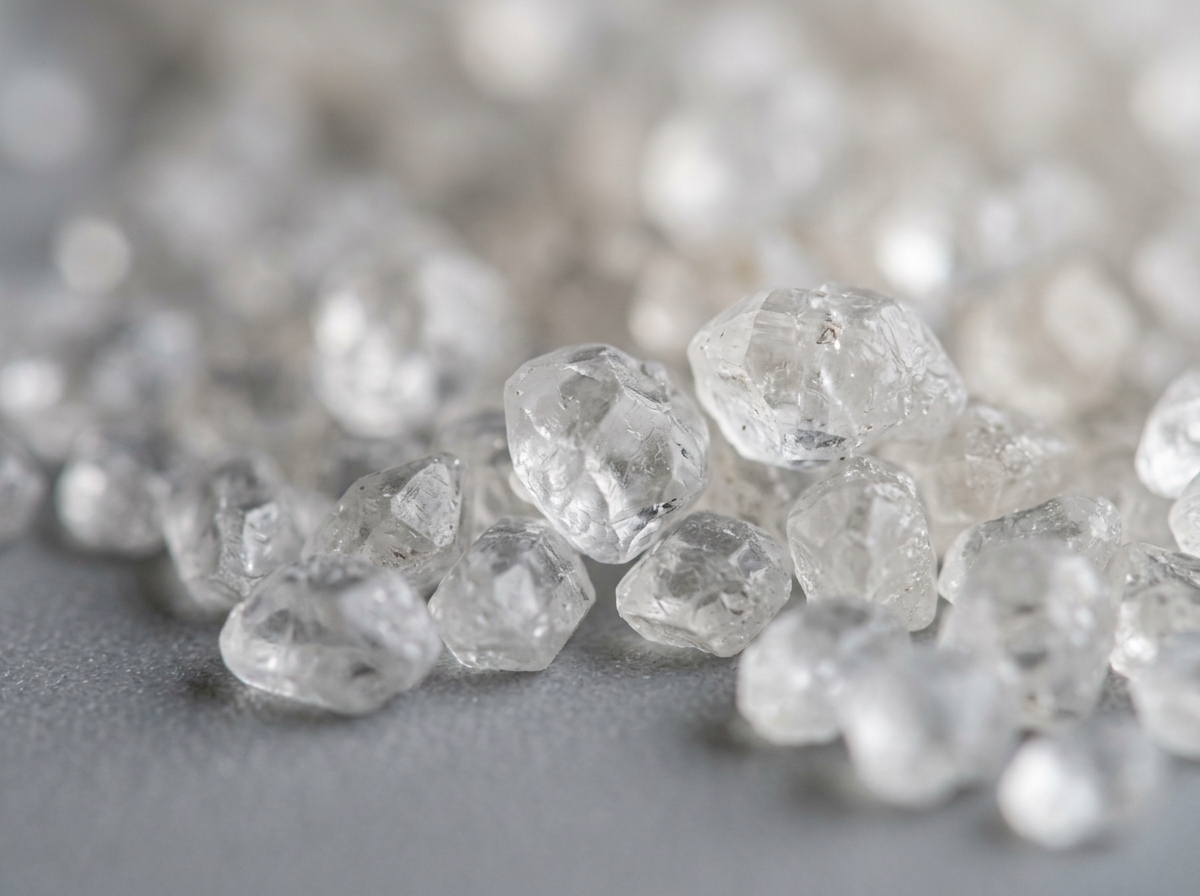
0.1 mm - 0.4 mm (approx. 40 - 100 mesh) or customized | Optical glass, electronic-grade fiberglass (Low-Dk/Ne), high-temperature quartz components. |
| Phase-4N8 / 5N High-Purity Crucible & Substrate Grade |
≥ 99.998%
Total Impurity < 8 ppm
|
d₅₀: 5 µm - 45 µm or melting sand | Quartz crucibles (middle/outer layers), optical substrates, chemical vapor deposition (CVD) equipment. |
| Phase-5N8 / 5N9 Ultra-Pure Engineered Grade (Up to 5N9) |
≥ 99.9998% to 5N9
Total Impurity < 1.5 ppm down to sub-ppm
|
Tailored per customer specifications | High-end quartz crucible inner layers, laser optics, synthetic quartz, specialized optical fiber preforms. |
High-temperature quartz crucible longevity and optical performance depend strictly on suppressing specific deleterious metallic impurities. Our partner facility's multi-stage Asian refining line targets sub-ppm thresholds across all critical elements.
Transition metals act as carrier recombination centers, degrading efficiency in single-crystal silicon. Multi-stage chemical leaching strips Iron down to baseline thresholds.
Aluminum triggers cristobalite devitrification at 1450°C during silicon ingot pulling. Strict Al suppression inhibits inner crucible wall degradation and particulate shedding.
Alkali ions have high thermal mobility, causing gate oxide breakdown and dielectric threshold voltage drift. Thermal calcination and acid extraction suppress alkali content.
Boron and phosphorus are electrically active dopant impurities that critically alter the resistivity of silicon wafers. Suppression below detection limits is mandatory for semiconductor and photovoltaic-grade quartz applications.
Concentrations expressed in parts per million (ppm by weight) via Inductively Coupled Plasma Mass Spectrometry.
| Element Symbol | Impurity Category | Standard Commodity HPQ | Phase-4N | Phase-4N8 / 5N | Phase-5N8 / 5N9 Ultra-Pure |
|---|---|---|---|---|---|
| Fe (Iron) | Transition Metal | > 3.00 ppm | < 0.90 ppm | < 0.35 ppm | < 0.12 ppm |
| Al (Aluminum) | Network Former | > 25.00 ppm | < 14.00 ppm | < 6.50 ppm | < 3.80 ppm |
| Ti (Titanium) | Refractory Interstitial | > 2.50 ppm | < 1.20 ppm | < 0.50 ppm | < 0.20 ppm |
| Na (Sodium) | Alkali Mobile Ion | > 1.50 ppm | < 0.80 ppm | < 0.25 ppm | < 0.10 ppm |
| K (Potassium) | Alkali Mobile Ion | > 1.20 ppm | < 0.70 ppm | < 0.20 ppm | < 0.08 ppm |
| Li (Lithium) | Light Alkali Ion | > 0.80 ppm | < 0.50 ppm | < 0.15 ppm | < 0.05 ppm |
| Total Metallic Sum | 12 Elements Combined | > 35.00 ppm | < 20.00 ppm | < 8.00 ppm | < 4.50 ppm (Sub-ppm for 5N9) |
Maintained within strict thresholds (< 5 ppm or custom tailored) to prevent structural deformation and preserve superior UV/IR transmission in fused silica and optical components.

Detection limits down to 0.01 ppb with 10-year archival retention on every production batch.
Screening, milling, and ultrasonic air classification calibrated to customer crucible fusion profiles and dielectric resin mixing requirements.
Optimized for fluid dynamics and minimum bubble inclusion during high-temperature fusion.
Designed for precision ceramic fillers, optical slurries, and advanced composite integrations.
Full flexibility to match your exact d₁₀, d₅₀, d₉₀ and particle cut requirements.
Under electric vacuum arc melting, quartz particles undergo rapid vitrification. Phase Industry balances particle geometry and packing density to eliminate gas pockets and suppress micro-bubble formation in synthetic silica ingots and crucible walls.
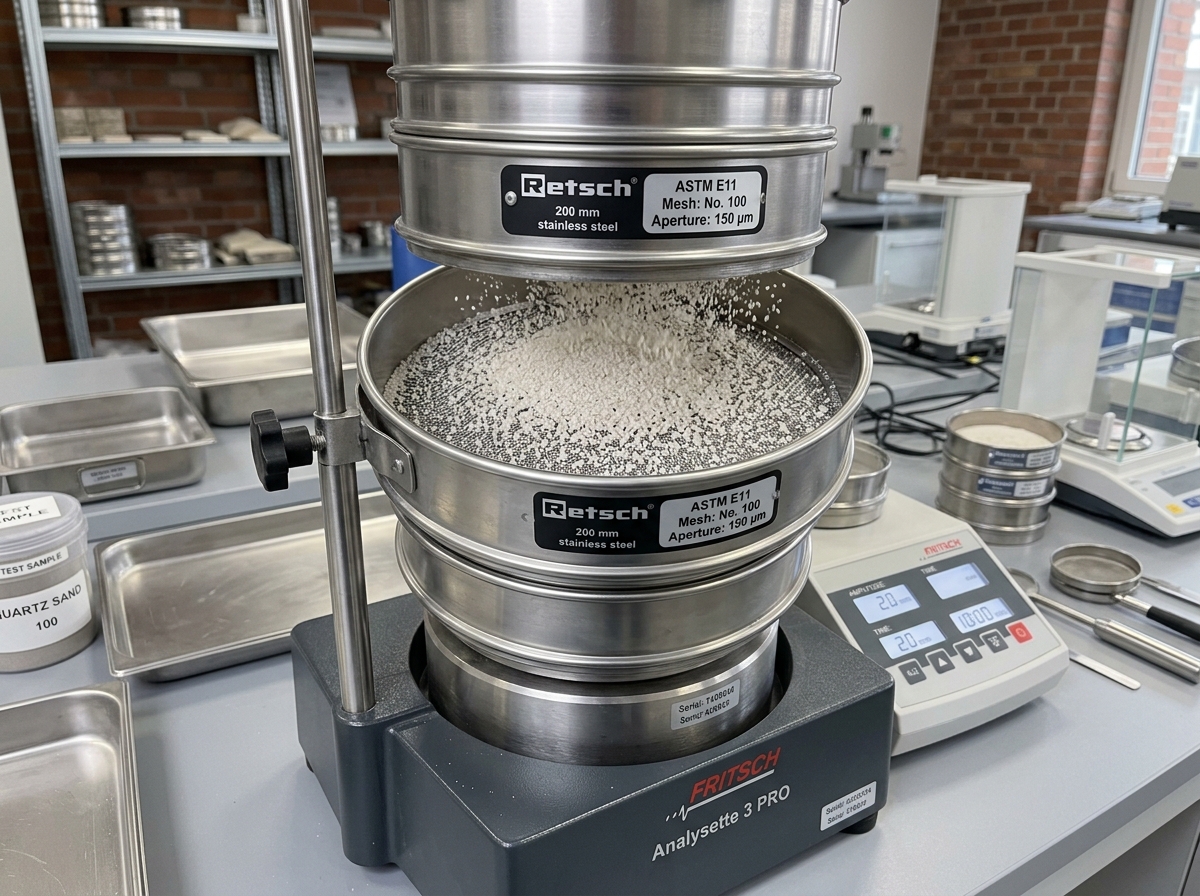
Contact our Singapore Commercial Office to configure custom mesh sizing, obtain batch ICP-MS trace element certificates, or arrange evaluation samples for trial runs.